Twitter

Follow me on Twitter: @janemcintyre12

JanePic

Hello.

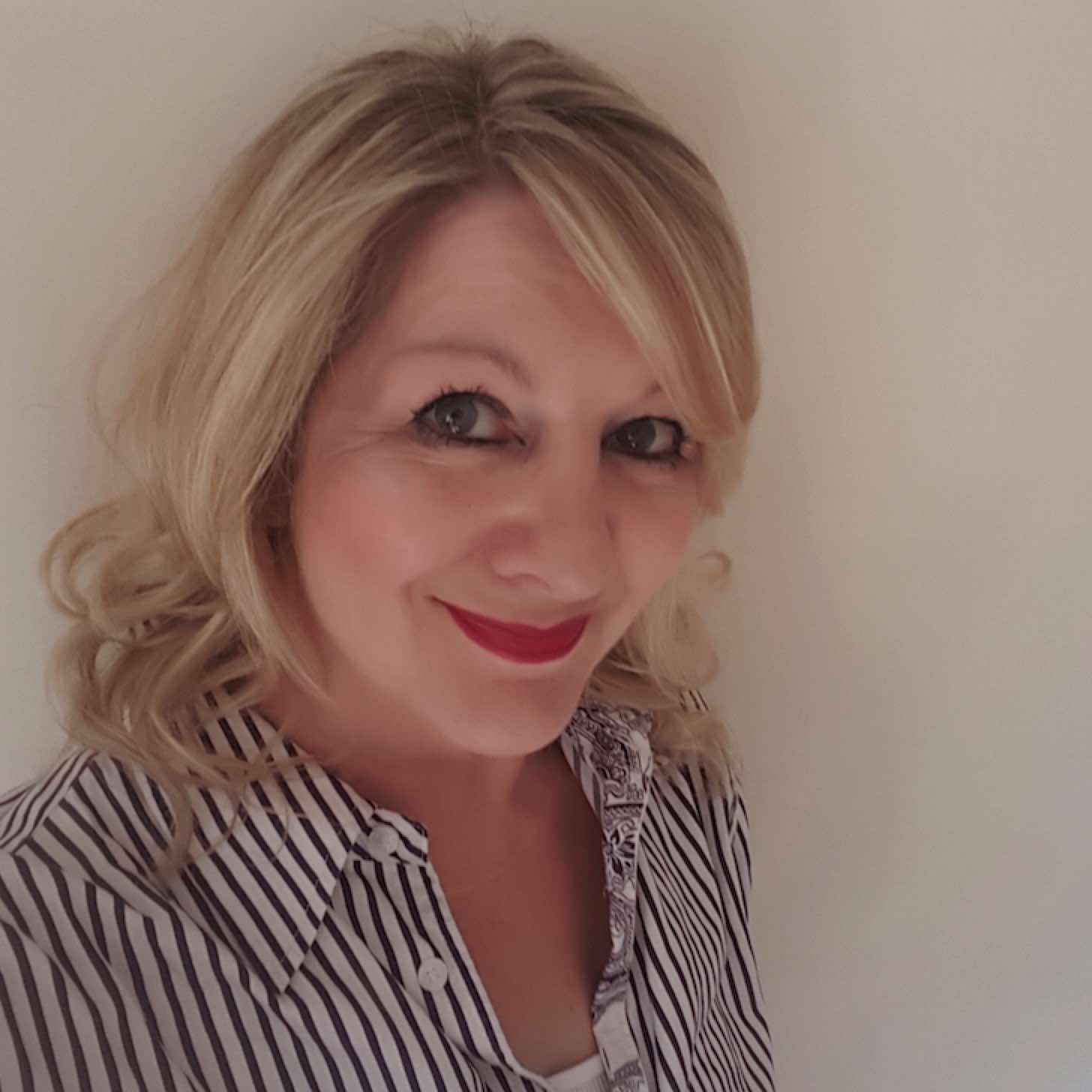
I'm Jane McIntyre, a voiceover and writer, formerly an award-winning BBC radio newsreader and producer. My blog covers life, love and loss; travel, coffee and chocolate; with some heartfelt pieces in the mix about my late dad, who had dementia. Just a click away, I'm half of the team behind www.thetimeofourlives.net - two empty nesters who whizzed round the world in 57 days.

Showing posts with label Breakthrough Breast Cancer. Show all posts

Friday, 4 July 2014

Kick the bucketlist. Just do it.


Bucketlists are supposed to be a list of things you really long to do before you die, aren`t they? And sadly, you often see people with life-limiting illnesses setting out what they`d like to see or achieve once time starts ticking by extra fast. Some make it. Others just don`t beat the clock.

So..well..this.

February on Harlech beach. 
Don`t write a bucketlist. Don`t wait for the moment you`re told you might not make it to the Queen`s telegram. Don`t procrastinate until you`re too ill to travel, or until the long lost friend you meant to visit in Sydney has popped their clogs .Just do stuff now. Maybe it`s skydiving. Or running a marathon. Or something closer to home like walking Offa`s Dyke, or strolling along your favourite beach in the moonlight. Or going camping in your favourite beauty spot. Or saying `sod the chores` and going out for a picnic.

I don`t want to get too morose about this, but we all know people who`ve received shocking news about their health. People whose life, suddenly, turns a right-angle. It can happen to anyone.

I was found to have a pre-cancerous, high grade breast condition called DCIS three years ago. I had to have minor surgery, then three weeks` radiotherapy. They`d spotted it on a mammogram--a regular test because of my family history (Mum got breast cancer at 48 and died seven years later. Three of her sisters got it too--two also died, and one has survived into her eighties). It was scary, but they were pretty sure that after thwacking mine with that course of action, I`d be fine.

So it was a bit of a shock a few weeks ago, the day before Dad`s funeral actually, to get a call saying my most recent mammogram had shown little dots, possibly calcification spots, and they wanted me back in for a biopsy. I was already shattered about Dad, but parked the fear, put on a brave face and closed it all off until after the funeral. Then I started Googling what it could be, and found that if it was another bout of DCIS, or worse, they wouldn`t be able to offer radiotherapy to the same area. It could mean a mastectomy and possibly chemotherapy. So I kept quiet, had the biopsy under a local anaesthetic, (the team at the Princess Royal Hospital in Telford were truly fantastic; thanks Dr Walsh and the radiography ladies) went to Glastonbury (would have been on my bucketlist if I believed in them...) with backpack straps bashing my bruising, had fun, regardless, and 35 long, long days after the call from the hospital, went back to the clinic for the results.

All fine.

The dots really had been calcification, and everything was benign. I asked everyone to double check, including the registrar who examined me. When I got up to leave, still trembling, my heart sank as he said: `There`s just one more thing I need to tell you`. Here we go, I thought. `Your buttons are completely done up the wrong way,` he said. I decided it would be inappropriate to kiss a registrar while partially undressed (or fully dressed, for that matter,) so made myself decent, legged it down the corridor, bought a breast cancer fundraising badge in a blur, and sped home, weeping with relief most of the way.

I didn`t fancy bubbly, or balloons. Or celebrating, much. There was a clinic full of women with me that day, some of whom would be getting far less welcome news. I feel for them. And for everyone else I know right now who`s living with cancer. I don`t, and won`t, ever consider myself `out of the woods`, and I signed up on the spot to be in a clinical study which might, just, help others.

Juliet on a chilly day trip to Aberdovey
But it got me thinking about how, if the news had been different, it would be less easy to see the places I still want to see, because there`d have been treatment, and possible side effects.

I asked for voluntary redundancy from my job two years ago, for a couple of reasons.That decision bought and brought me freedom, and the chance to travel, relax, see the people I want to see, wipe out every bubble of work-related stress and focus on my priorities. So yes, I`m incredibly lucky, and I`m hoping to travel again soon, and treat my daughters to some trips, too.

It`s all well and good if you have spare cash to travel to those special places. If you don`t, there are cheaper ways to travel. Here are my top tips:

+I signed up with a house-swapping website (www.guardianhomeexchange.co.uk ). You need to pay your travel, but you can get free accommodation in the UK or further afield.

+List yourself as a house-sitter, and care for someone`s home and or their pets while they`re away, in a location you really want to visit (TrustedHousesitters.com).

+ If you fancy a weekend under canvas, but don`t have the kit, try Freegle (www.ilovefreegle.org) , and get a tent for free, or ask your friends (I have a leaky pop up tent from Glasto...but if the forecast is ok and you want to borrow it, just shout!)

+If you want to skydive or parachute jump, you might be able to sign up at a charity event, and get your kicks while raising cash. And if you`ve always longed to run a marathon, you probably can. Just start slowly, with help from a local running group (www.shropshire-shufflers.org) --and you might just cross that line in the Mall one day.

So that`s it really. No bucket to kick this week, I hope. No lists. But no procrastinating, either.


Badge from the fundraisers at PRH.


Wednesday, 11 December 2013

Dear David: A tale of two parents.


Dear David Cameron and all at the G8 dementia summit. Got five minutes to hear about my mum and dad?

First: Jeannie.

She was 48 when she developed breast cancer. It was found just weeks before she was due to get married (to a man whose wife, sadly, had died of breast cancer). They went ahead with the wedding. A Londoner, Jeannie had worked in the city since her teens. She met Bertie at one of the big banks. She travelled to some fantastic places on business with him - on Concorde once. And when she needed it, the care Jeannie received at London teaching hospitals was among the best available anywhere in the world.

Although Jeannie had some good, 'clear' years, the cancer was to return in a very aggressive form, and she died seven years after diagnosis. She never knew her grandchildren: all of them lovely and sources of great pride.

The disease had claimed the life of one of her five sisters, and was to prove fatal, later, for another. A third sister has beaten breast cancer twice, and has survived into her eighties. So, it's 'in the family' and has knocked at my door too. Because of that, I have regular screening, was accepted on to a pioneering MRI research programme and another looking into DCIS. I feel 'watched over'. In a good way.

Now: John.

Down the mines near Musselburgh at 14, he 'escaped' to London to join the Met police. He was on the beat in London, then selected for royalty protection duties, often solely responsible for the security of key royals. He stayed in palaces around the world, worked the longest days, was an excellent marksman, fit and strong; protecting people. And looking after his family.

He's been battling Alzheimer's for over five years, and so now, we're doing our best to look after him. These days, he's bedridden, but at home. He needs help with every aspect of daily living. His face lights up when he sees me, but sometimes he forgets my name. He got to know the grandchildren well, but now struggles to remember their names or what they're up to.

I never expected to be standing over my big, brave dad with a toddler cup and a feeding spoon, but that's the way it is. His partner and carer, Phyllis, does an amazing job, backed up by visits from a local carer, paid for by Dad. She needs a break. Lots of breaks. Local carers' groups are helping, but it all takes planning, and Dad's not always receptive to newcomers who might 'sit' with him. He's had some bad days lately. Sleepy weeks. Not sure what the future holds, really. It scares me.


I was shocked, Mr Cameron, to see a report by Fergus Walsh on BBC news last night. It contained a statistic from the Alzheimer's Society, on how research into cancer receives eight times as much funding as research into dementia. Eight times! Is one condition more 'cruel' than the other? More deserving of investment into its prevention? I don't think so. From where I'm sitting, they both hurt like hell.

I know you've said you're working to address this, planning to double the amount of funding over the next decade or so, to £132 million, and increasing support for carers, like Phyllis.

But I'd like to hear that you're not 'just' doubling dementia funding... but quadrupling it, and then some. It seems that because dementia was for so long considered to be a sad and inevitable fact of life for some elderly people, it's slipped down the priorities list, and it shouldn't have done. You have the predictions and the projections at your fingertips now.

Cancer and dementia are equally cruel conditions in their way; for patients, and for families like mine. Both are dreaded and feared. I hope you use this G8 summit to make dementia research and care as much of a priority as that surrounding cancer, and as an opportunity to think about devoting more funds to those with other life threatening and life limiting conditions. Please keep support for carers uppermost in your mind. With the dementia timebomb ticking, you're going to need them more than ever. And they will be looking to you, to get the funding, the support, and the respite they desperately need.

Tuesday, 30 October 2012

Breast cancer risk? You tell me....


My mum , Jeannie Morris


So-another week ; another debate about breast screening, and whether it causes more harm than good.

An independent review into the value of mammograms  reportedly showed that for every life saved, three women had treatment for a cancer which would never have been fatal.

That treatment might be radiotherapy, chemotherapy or surgery; all with their own side effects.

More information for women will now be made available apparently; to help them make an informed choice. The national cancer director, Professor Sir Mike Richards is quoted as saying this issue has become an area of `high controversy`.

You bet your life it has, Professor.

But should I bet mine...by attempting to make my own decision about the course of treatment I should have, if a little undiscovered planet is spotted in that galaxy of stars on the radiologist`s screen?

The answer is--I don`t know. It`s like the heating engineer telling me my boiler might last another year; might not. But with a £500 overhaul.....I`ll definitely stay cosy. Or a car mechanic offering me a temporary fix,or a brand new engine to be on the safe side. Who knows?

But as far as breast cancer goes; I know too much. Mum was one of six sisters. Four of them developed breast cancer; three, including mum, died from it. Each was given the facts, and made decisions about their treatment as best they could.

The two eldest had the recommended mastectomies. One died, one went on to have a second mastectomy and has survived into her eighties.

The youngest of the six sisters watched it move through the family, and opted for a double mastectomy and reconstruction; a course of action a cousin of mine has chosen as well.

Mum wasn`t on a screening programme--she spotted her own cancerous lump at the age of 48--weeks before she was due to marry a man whose first wife had died...from breast cancer. She had her own decisions to make about her treatment, and even whether she should go ahead with the wedding. She opted for minor surgery and radiotherapy; and the wedding. Not the mastectomy that doctors suggested would have been a safer course of action.Was she right?

You can only give patients advice and ultimately leave the decision to them. I don`t doubt that what her husband-to-be had gone through, swayed her decision. But did it kill her? Should she have gone for more radical surgery to try and eliminate the risk? They had seven years together before the cancer really took an aggressive turn, went on the march, and despite every possible form of treatment available, included the mastectomy she`d tried to avoid, mum died .

My family history means I was lucky enough to be offered a place, some years ago on a clinical trial which compares mammography with MRI scanning. And then to be offered annual screening.

And then suddenly, we were talking about my generation. Last year`s scan spotted a little blip on the radar; a condition called Ductal Carcinoma in Situ. I tried to focus on the `stuck in a duct` bit, rather than that `carcinoma` word, which no one wants to hear. I had surgery to remove the affected area and some tissue around it. Then there were three weeks of intensive radiotherapy; which for the most part involved me sprinting in and out of the treatment centre in running gear and trainers. My brain told me I was *fit*; so I shouldn`t be there. The staff were brilliant. I was, compared to many waiting for treatment, completely blessed, but I hated every second and couldn`t bear to meet anyone`s eye, wearing shades most days in the waiting room, and flinching when someone called out my name. I kept the treatment a secret from all but my closest friends and colleagues. That meant carrying on working full time as a breakfast show producer, getting up at 3.30 am.

After it was over, with just a three inch scar and some tiredness, all I could feel was immense relief and good fortune: it was a high grade `blip` caught before it had invaded the surrounding tissues--at which point, apparently, I would have been advised to have a mastectomy. Would I have gone ahead with the surgery? I truly don`t know.

I know plenty of women whose cancers were found early, and who are quite sure they owe their lives to screening, and in some cases to the treatment that followed. Cancer charities seem to be recommending that you go ahead with screening if you`re called for a mammogram under the national programme.

And then, increasingly, you`ll have to make your own decision about anything they find. If you`re waiting for an incisive,well considered conclusion to all this--I don`t have one.

If the oncologist I`m booked to see in a couple of weeks,or any other doctor in the future finds something wrong with me, I want to be treated like the intelligent human being I am, to weigh up the options and statistics, and help shape the events that follow.

But --and excuse me for sounding weak here--a part of me still wants to say hey..do you know what? You`re the one in the white coat. I`m crap at stats. I truly have no idea. Please decide for me.

bbc.co.uk/health

cancerresearchuk.org

breakthrough.org.uk